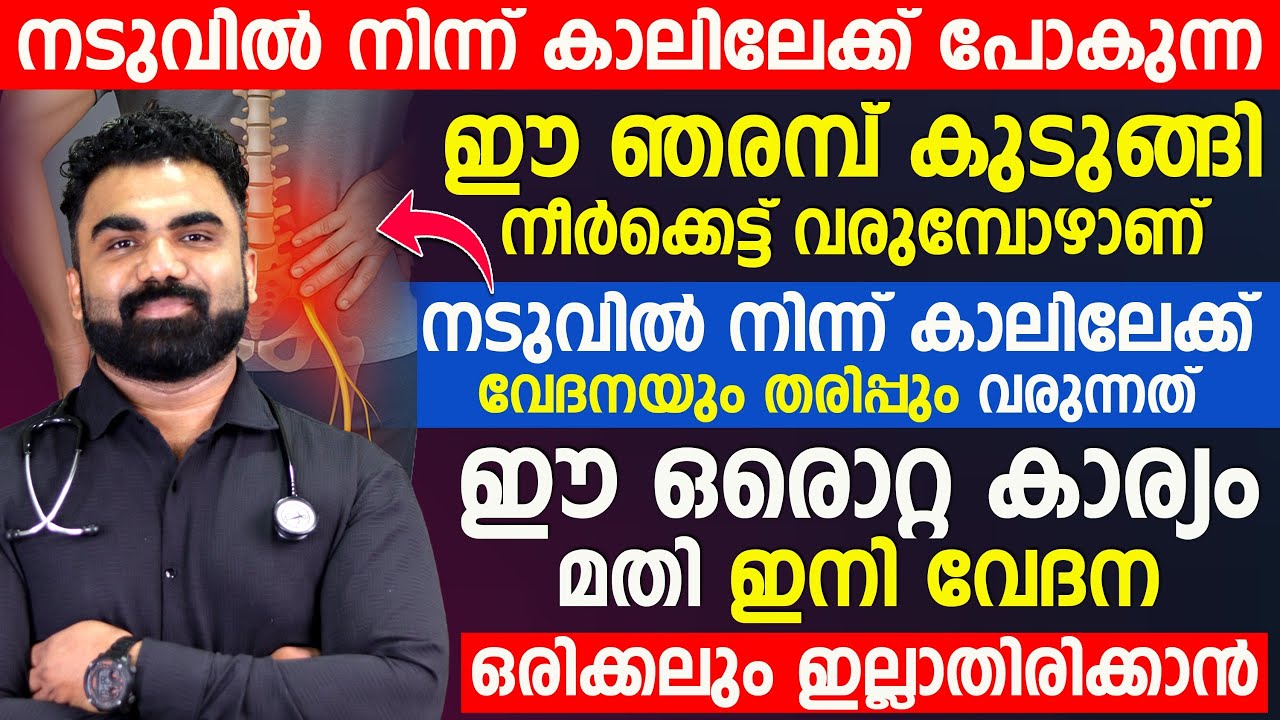
The video explains the causes, symptoms, and management of sciatica, a condition characterized by pain, numbness, or a crawling sensation that radiates from the lower back down through the legs. Dr. Abdussamad notes that this is often caused by inflammation of the sciatic nerve due to spinal degeneration (lumbar spondylosis) or a disc bulge/prolapse. A disc acts as a cushion between vertebrae, and when it bulges—often due to heavy lifting or sudden movements—it can press against nerve roots like L4, L5, or S1. This pressure leads to specific pain patterns, such as pain on the side of the thigh and big toe (L5) or behind the buttocks and thigh (S1).
Management strategies range from conservative treatments like rest, gels, and physiotherapy to more urgent interventions. Dr. Abdussamad highlights “red flag” symptoms that require an immediate MRI, such as leg weakness, loss of bladder or bowel control (Cauda Equina Syndrome), or severe pain following a fall. For chronic pain that doesn’t respond to medicine, options include epidural injections to reduce inflammation, laser nucleoplasty, or surgical decompression if the spinal canal is significantly narrowed (stenosis). He emphasizes that since the spine is a complex, constantly moving structure, long-term recovery depends heavily on correct posture, regular strengthening exercises, and lifestyle adjustments rather than a single quick fix.